
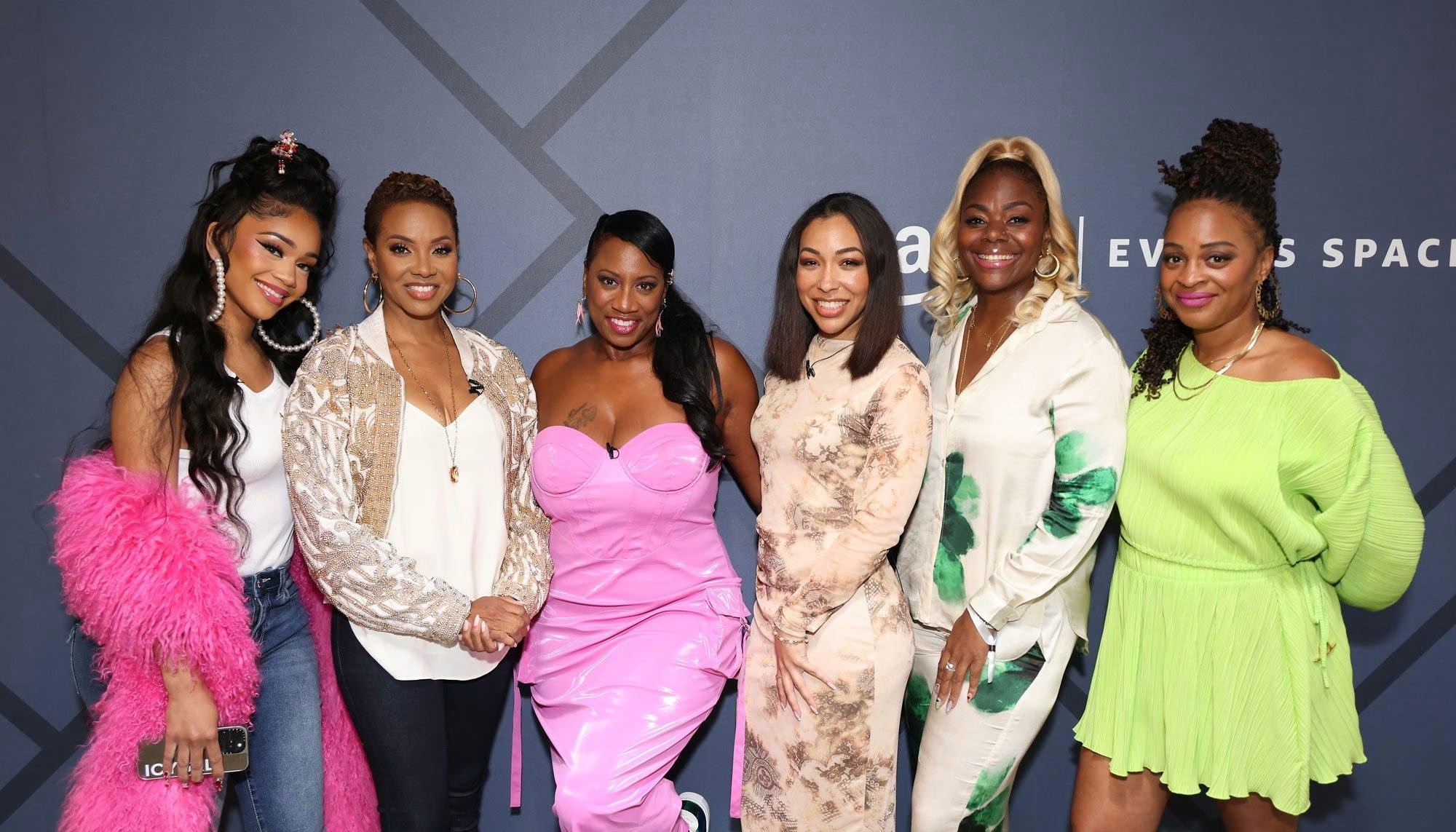
If ever an event lived up to its name, it was She’s Iconic: A Salute To Women In Hip Hop, a panel discussion hosted by MusiCares for the Los Angeles edition of the Humans of Hip Hop initiative, H3.
The Los Angeles session, held on June 18 in partnership with Vivid Seats and H3 contributor Amazon Music at Amazon Studios in Culver City, offered insight into the lives and careers of four strong Black women who help hip-hop culture continue to thrive both artistically and as a global business force: recording artists MC Lyte and Saweetie, dancer/choreographer and radio/TV personality Leslie "Big Lez" Segar and Amazon Music’s Head of Hip-Hop/R&B, Sierra Lever.
Moderator Laiya St. Clair, a radio personality and producer for the Questlove Supreme podcast by The Roots drummer Questlove, led a conversation about the influence of women in hip-hop culture, fighting adversity and using their considerable platforms to inspire others. They explored mental health awareness and the importance of community as well as self-care.
For the past 35 years, MusiCares has helped attend to the health and welfare of the humans behind music through preventive, emergency, and recovery programs aimed at tailored crisis relief. As a non-profit charity organization, MusiCares also offers direct financial grant programs and other support networks. MusiCares’ Humans of Hip Hop initiative presents specific resources to the nationwide hip-hop community, beginning with an initial focus on eight key cities: Atlanta, Chicago (where the organization recently held a panel led by Common and Lupe Fiasco), Detroit, Los Angeles/Compton, New York, Oakland, Philadelphia and Washington D.C.
The Los Angeles event presented crucial advice and care for anyone navigating their way through the challenges of hip-hop business and culture. Read on for five of the biggest lessons from the memorable evening.
Call the Shots
MC Lyte wasted no time in sharing how she regards women in hip-hop, and how we should be treated.
"I think we run it," said Lyte, who recently released 1 of 1, her first album in a decade. "It's so refreshing to see as many women with a microphone right now, because I come from a place of having very little, then we had a lot, then we had a little, then we had none." She mentioned Houston as a particular hotbed of female talent at the moment, having read an article about 22 different rappers on the rise who are making moves in just that one city.
"I think the time that we're living in now, everyone just has to understand that women are bosses," she continued. "So when they are stepping into these arenas now, when they're [getting billions of streams], it's like, you can call the shots. And I think that's extremely important to have gone from a Sha-Rock, who first rocked the mic with Pebblee Poo, to The Sequence and Roxanne Shante and Sparky D and Sweet Tee, The Real Roxanne. It's so many people who laid the foundation for all of those right now to be able to stand up for what it is they believe in, to get what it is they should get in terms of equal pay, to be on the bill exactly where they belong. So it's a lot. People, we have come through the trenches and we're getting what we deserve now, which is the light. No pun intended!"
Read more: Living Legends: MC Lyte On Her New Album '1 of 1,' Building An Empire & Being The Guiding Light
Inspire Others
Sierra Lever talked about how her tireless work ethic propelled her to executive success, from booking local rap acts as a teenage college student in Portland, OR to now being the first woman and the first Black person to be Head of Hip-Hop/R&B at Amazon Music. Both the audience and panelists were audibly inspired by Lever's journey. Saweetie took a moment to thank her and all the women who work tirelessly behind the scenes in hip-hop. She also asserted the importance of having a positive effect and uplifting others with your work.
"What's the point of having a platform if you're not inspiring others?" Saweetie asked, to universal nods from the panelists.
Protect Your Image
Big Lez stressed the importance of protecting your image as a woman navigating through such a male-dominated culture. People will gossip, and they won't always be couth.
"You have to worry about protecting your reputation because, you know, 'Oh, she must have got that job because she did this," she said. "So you have to really work hard to protect your image. And your skill set has to be the thing that leads you in the door and it's the reputation that you leave with."
Move and Evolve
Each of the panelists have worn many hats in the hip-hop business. MC Lyte, for example, became an actress, voiceover dynamo and even a GRAMMY announcer. Saweetie received a 30 Under 30 nod from Forbes for her business-building prowess, which includes major brand partnerships in food, cosmetics, fashion and more. Big Lez was a star gymnast in college and went on to work in hip-hop as a choreographer, radio host, TV presenter and actress. She had to learn how to move and evolve into different roles over the years to enjoy longevity in the industry.
"My mother would always ask me, 'So how long do you think you're going to be doing these cartwheels and these backflips?' Well, Jackie Chan's still moving, what are you talking about?" she laughed. "But when I saw people like Debbie Allen transition, she's the blueprint, right? I'm going, 'Okay, what's really going to happen once I can't dance or I get an injury?' Dancers, I think, make the best actors and actresses."
"It was very important for me to keep evolving and moving," she continued. "As I'm getting older my body's getting slower, things are starting to hurt. I wanted to grow and evolve and you can't waste your time… It was just a natural instinct for me to just move and evolve through my careers. And it was tough, but I think people who were the gatekeepers at the time had seen my history, so they knew that I was dependable. You show up, you be on time, you be professional, and they're like, 'Alright, we've seen her work, we know that we can trust her with our stories.'"
Check Your DMs
One of the most heartwarming moments of the evening is when Saweetie found out that MC Lyte had offered her friendship during a dark time in the public eye a few years ago, but she didn't know it because she hadn't checked her direct messages on social media.
The revelation came when Saweetie was asked if she has a good support system of colleagues in the business.
"I feel like there's two sides to the community that I'm currently facing," Saweetie said. "You know, when there is women empowerment, it's a beautiful thing. You feel like there is a real sisterhood. However, in my experience, I've never had a mentor. I've been out here with no guidance and I've never had someone reach out to me and just check on me."
"I did!" Lyte interjected.
"When?" Saweetie asked, drawing a laugh from the audience.
Lyte proceeded to describe a time when she reached out after opening the door through a mutual friend. "I DM'd you and I said, 'If you ever need to talk sister, I'm here," Lyte recalled. "I'm not sure if you got that, someone might handle that account for you. Just know that I'm here whenever."
"Wow. I really appreciate that. I've got to check my DMs," Saweetie laughed.
Panelists and audience members alike left this session of MusiCares' Humans of Hip Hop (H3) initiative with a renewed sense of the importance of sisterhood, self-care and standing up for what's right.
5 Women Essential To Rap: Cardi B, Lil' Kim, MC Lyte, Sylvia Robinson & Tierra Whack