
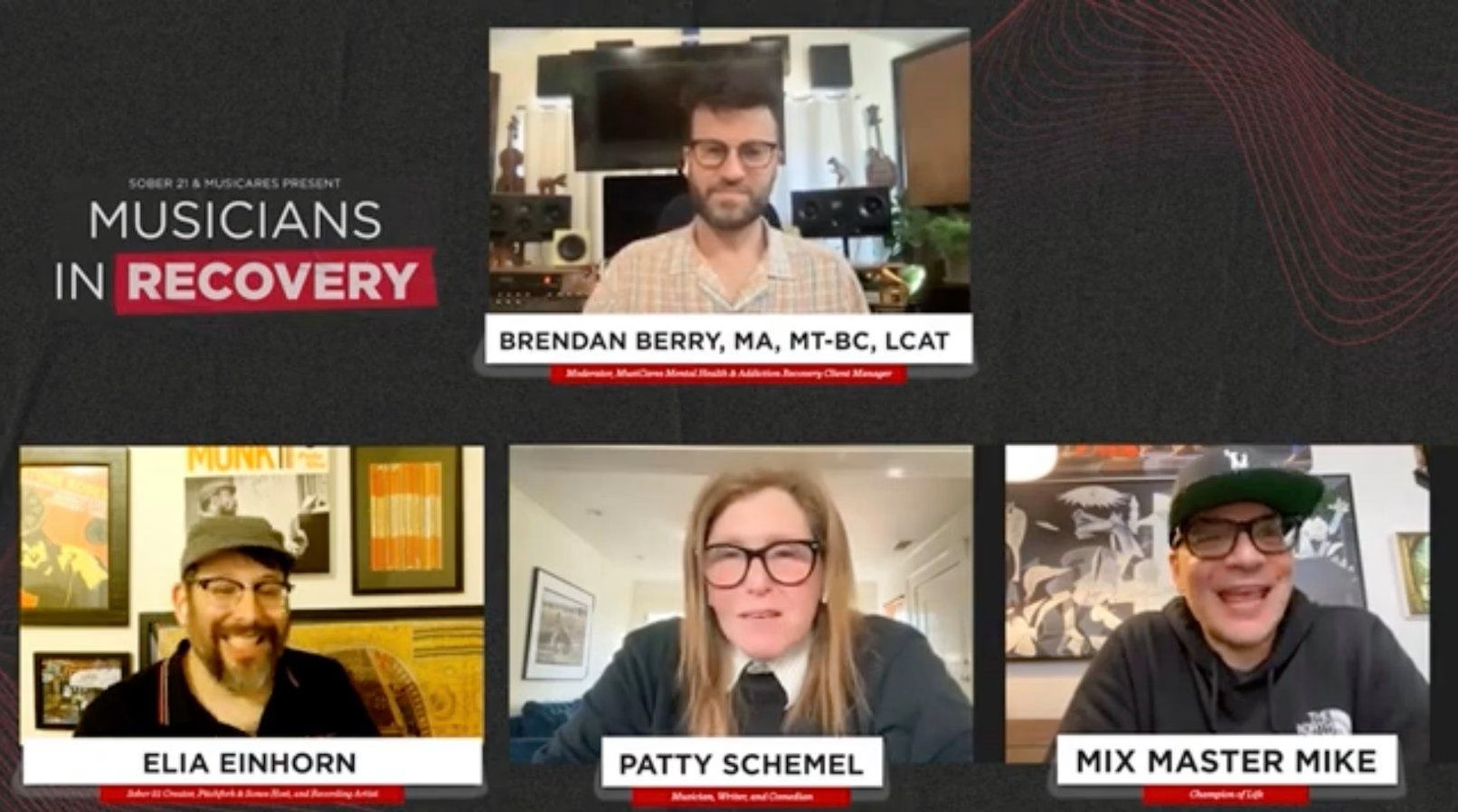
If you've ever wondered how rock stars get sober and stay sober, MusiCares and Sober 21 are shedding light on sobriety in the music world with a continuation of its collaborative panel series. Titled Musicians in Recovery, the ongoing series recently featured Beastie Boys' Mix Master Mike and Hole's Patty Schemel, who both opened up about their journey to sobriety.
Moderated by Elia Einhorn, founder of Sober 21, and Brendan Berry, MusiCares' Mental Health & Addiction Services Client Manager, the hour-long panel featured an in-depth discussion of the unique challenges of getting sober as a well-known musician, and the doors that opened once they started over in recovery.
Each panel will be recorded, and all videos will be available online to serve as a resource for those who are getting sober and in recovery.
Watch the conversation with Mix Master Mike and Patty Schemel, and read three important takeaways below.
This video contains strong language and drug/alcohol references.
You won't lose your musical "superpowers" if you get sober.
A prominent fear for both Patty and Mike was: "What happens when I quit? Am I going to be who I am? I still gonna be that superhero that people know me as?"
"I got my superpowers from doing [drugs]," Mix Master Mike (whose birth name is Michael Schwartz) shared. "I thought it made me the best musician I could be."
But he added that sobriety actually "magnifies us," makes us less numb and more real. Patty echoed that: "Your career will only begin when you get clean."
All four panelists agreed that what felt a superpower was, in reality, a delusion, and becoming a reliable human being gives you the ability to be of better service to the music, your collaborators, and the fans.
The path to sobriety in music has already been paved.
When Einhorn asked who Schwartz and Schemel looked to as sober inspiration in music, they found it was the same act: Red Hot Chili Peppers.
Anthony Kiedis and Flea have been openly sober since the late '90s. Their harrowing and inspiring stories serve as inspiration for many, because not only did they survive substance abuse disorder and earn continuous sobriety, but they created some of their best work during their recovery. The Chili Peppers showed Schwartz, Schemel and the world that it's possible to be a sober rock star and make amazing music.
But Schwartz and Schemel are themselves role models for the new generation."You two are people that younger people might be looking at right now and thinking 'damn, they did it; they went through the hell, and they came out of it and stayed sober, and that's a powerful thing,'" Einhorn said.
Schwartz got sober in 1998, right when he was asked to join the Beastie Boys in the studio and on tour - a period that solidified the group as hip-hop royalty. "I was not going to let substance abuse tear down what I worked so hard for," he shared, "I couldn't bring that life into their world."
During Schemel's time as the drummer of Hole, Courtney Love's '90s rock band, drugs and alcohol were running the show. She was referred to MusiCares for help (then it was called MAP, Musician's Assistance Program), but she shared that it wasn't until her third time in rehab that her sobriety took root. "It doesn't always happen the first time," she shared, offering hope that even if your path to sobriety has starts and stops, you can still get there.
Music is a natural high.
Schwartz and Schemel agreed that music itself is the finest elixir that can elevate the spirit, heal, and set us free. The music itself can change your mind, no substances necessary; that clarity and pure expression can grant you a natural high like no other. And playing music, whether it's for a crowd or alone at home, is also its own therapy.
Those who suffer with substance use disorder commonly seek to be released from their feelings. Drugs and alcohol mute and numb feelings for a period, but they only postpone (and likely deepen) the need for healing. Going straight to the music, with support and the help of effective recovery tools and treatment, can put you in the express lane to recovery and mental wellness.
For his closing message, Mix Master Mike gave simple advice to his fellow musicians: Get into what you love.
"Put all your energy and effort into what you love and what you believe in," he said. Not only will that fulfill you as an artist, but it will build a strong foundation for recovery.