
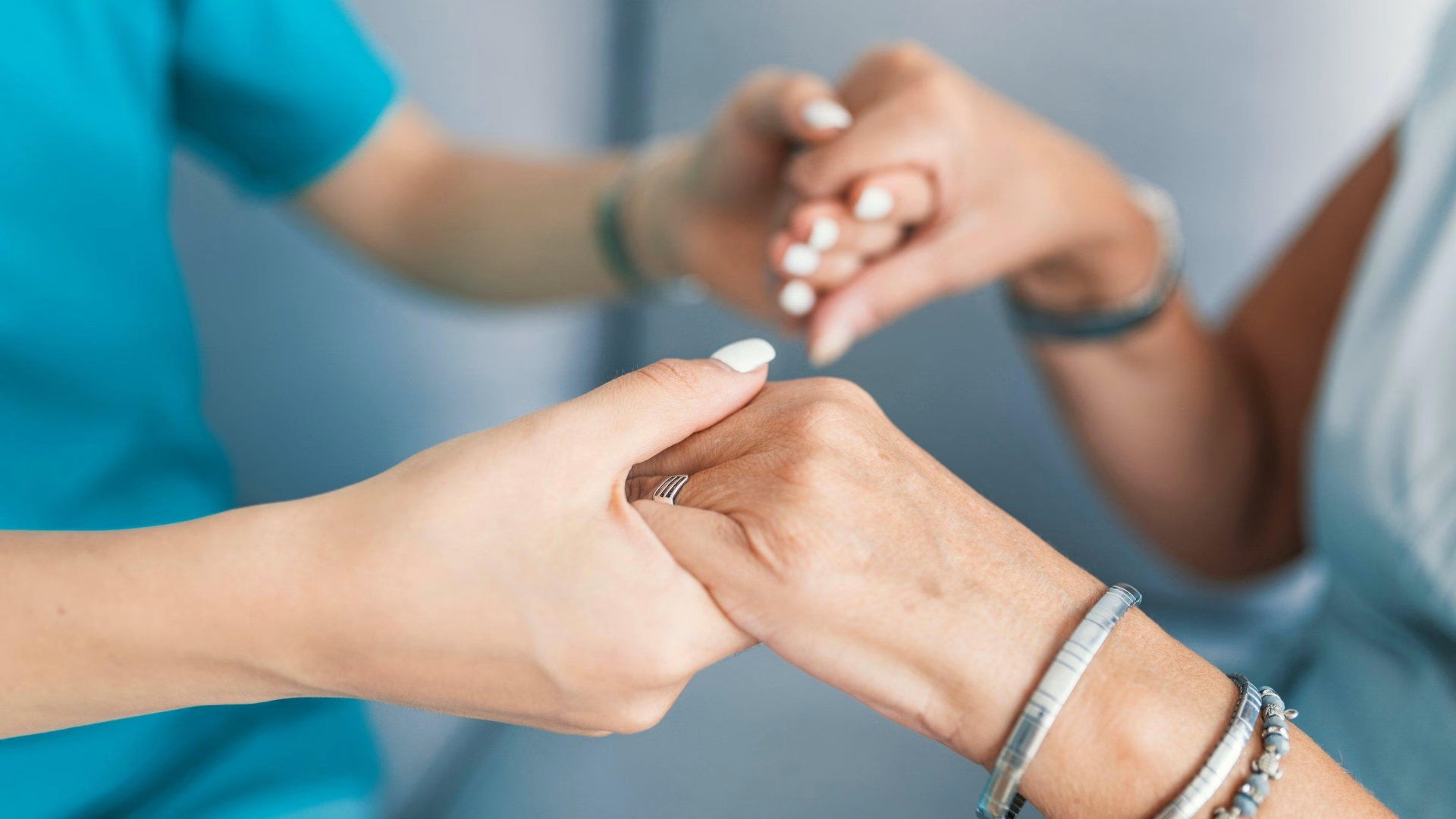
In honor of National Wellness Month this August, MusiCares is highlighting patient safety.
Patient safety is a topic that should be a priority within the music community, especially in the midst of a pandemic. Touring musicians and crews may need to receive healthcare in an unfamiliar setting, and it's important to be prepared with the right questions to ask in these situations.
Nile's Project is a nonprofit coalition composed of entertainers, artists and patient safety organizations who are all focused on ending the preventable spread of infectious disease and sepsis. In 2006, Nile Calvin Moss lost his life at just 15 years old to MRSA (Methicillin Resistant Staphylococcus Aureus), a preventable hospital acquired infection. His parents, Carole and Ty Moss, honor his life through their dedicated work raising awareness surrounding the preventable epidemic of hospital acquired infections.
Carole and Ty shared their knowledge and resources with MusiCares in an effort to educate the music community to be aware, be prepared to protect themselves as patients, and improve the possibility of positive healthcare outcomes. Take a look at some of their tips below.
The CDC does not have the power to enforce best practices for infection prevention or other known safety tools.
Carole: "The Center for Disease Control and Prevention is composed of top scientists that have the answers and have known how to prevent the spread of infectious disease for decades, but they do not have the power to enforce best practices for infection prevention or other known safety tools. Unless these proven best practices are placed into law by state for federal legislators, implementing these proven processes at healthcare facilities are optional."
You should familiarize yourself with the signs of sepsis, because time matters.
Carole: "Sepsis is a complication caused by the body's overwhelming and life-threatening response to infection. It can lead to tissue damage, organ failure and death. It is also really difficult to diagnose, because it happens quickly and can be confused with other conditions. This is extremely dangerous, as sepsis is a medical emergency that requires quick attention. There are signs of sepsis that can be seen right away, and if we educate people, they will be able to reach out for emergency help right away."
Learn more about sepsis and how to get ahead of it here.
(L-R) Carole, Ty and Nile Moss | Photo: Courtesy of Carole and Ty Moss
Staph infections can be resistant to antibiotics.
Carole: "What Nile got was a staph infection that was resistant to penicillins and antibiotics, and that's what a lot of people have been contracting. Hundreds of millions of people get staph infections, MRSA, just from going into the hospital. One of the reasons why is that we are eating antibiotics in our food, and what happens is we form a resistance. So, when we have an infection, the antibiotic medications do not work."
Learn more about antibiotic resistance and related threats here.
Education can empower you to advocate for yourself and your family.
Ty: "We want to empower the music community with information so that they can feel comfortable asking questions and demanding protection as a patient. If you see people coming into your hospital room without washing their hands, you need to be knowledgeable enough to ask them to wash their hands. A lot of things are now slipping through the cracks because of COVID. We need everyone to be fighting as advocates for themselves and their families, and we hope that information will empower people to feel comfortable doing so."
The Patient Safety Movement Foundation has developed an app that provides easy to understand explanations of common dangers and recommendations for questions that you should ask when visiting the hospital. Learn more about PatientAider here.
How MusiCares Supports Holistic Health & Wellness In The Music Community Year-Round