
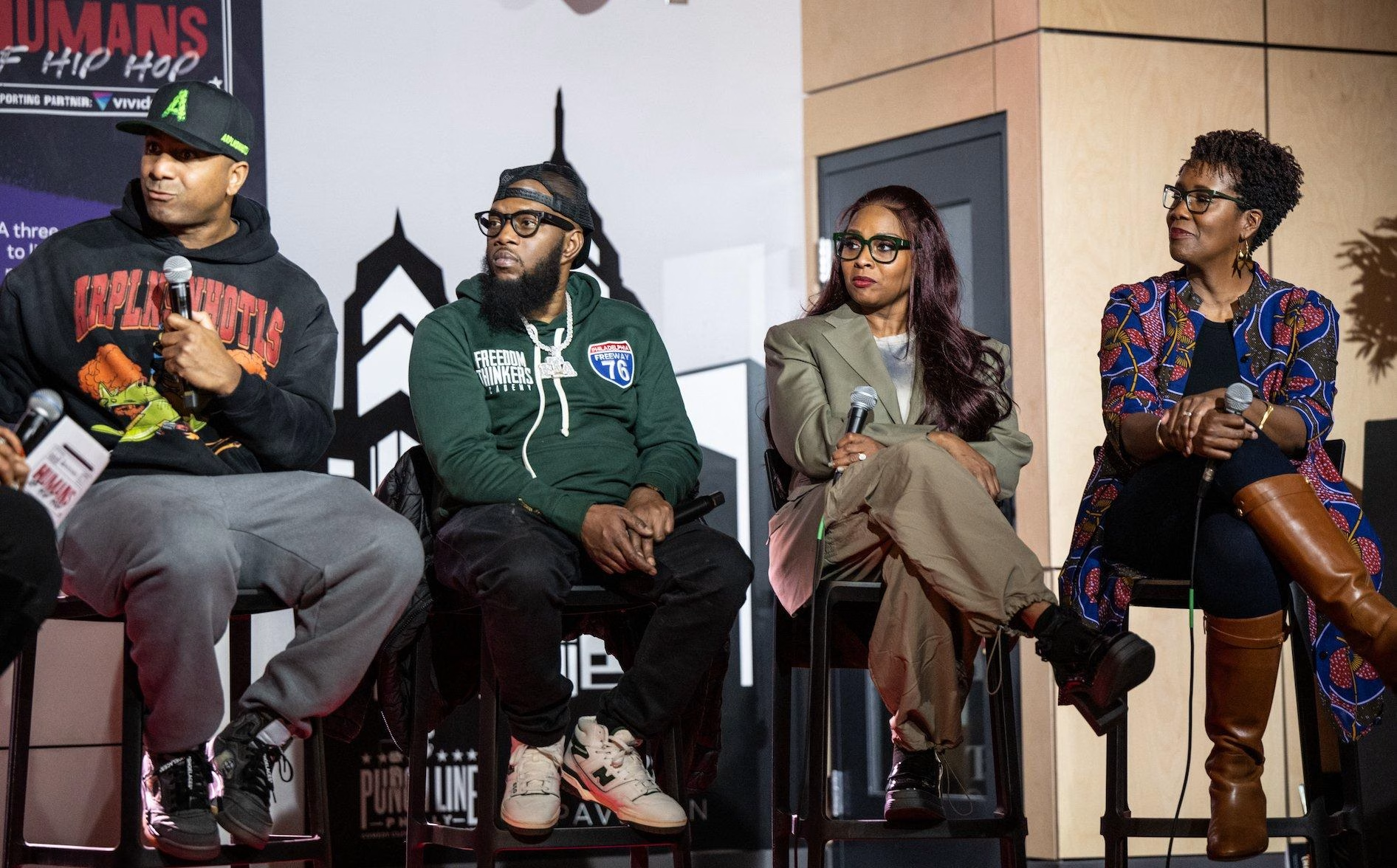
On Nov. 20, MusiCares' Humans of Hip Hop campaign continued with its third co-creation launch in Philadelphia, "Voices of Hope and Resilience," a dialogue on overcoming trauma and mental health within the Philly hip-hop community.
Philadelphia stands out as a pivotal player in shaping the legacy of hip-hop today. This is why many were enthusiastic to hear from the esteemed local panelists Wallo267, Freeway, Ms. Jade, Dr. Monica Campell, and the event's West Philadelphia-native moderator and female emcee, Lady B.
With opening statements from Philadelphia Mayor-Elect Cherelle Parker, Humans of Hip Hop Philadelphia was filled with warmth and candor from each of the panelists and guests. It was inspiring to hear each well-respected figure in the Philly hip-hop community peel back the layers of their own mental health struggles and bask in unapologetic vulnerability.
All photos by Lisa Lake/Getty Images.
"I don't care — the race, the class, the socioeconomic status, sexual identity, gender, religion — I don't care who it was. The message that you gave, say, 'clean green, access to economic opportunity for all,' it did not change. How could we do that for our young people, and then listen, pay them for it." — Mayor-Elect Cherelle Parker
Mayor-Elect Cherelle Parker set the tone for the night with her empowering, yet truthful, discussion on the need for equal opportunity in the city of Philadelphia. She also commended the people in the music industry that make it possible to help newer artists find their voice and protect them both legally and mentally.
She touched on her own come-up in her career, saying "I wasn't successful. People didn't pick up what I was putting down, but guess what y'all? I'm about to be the 100th mayor of the city of Philadelphia."
She pushes for change in the city, and encourages people to find their voice by taking a more active role in government. Whether that be on a board, commission, or simply sharing how to make the city cleaner and safer, she is making it her mission to give more Philadelphians the opportunity to interact with their government, something many people feel they don't have. She told the audience, "Don't ever tell me that you didn't have the opportunity to share what you felt about your city."
"I think the dehumanization of Black people by Black people is vicious." — Wallo267
Wallo first talked to parents when he said, "I think the dehumanization of Black people by Black people is vicious." One of the reasons, he said, why he got into the streets was because being tough and unfeeling was prioritized against being human.
He uses a kid crying after falling off a swing as an example for how early parents first take that human emotion away from you. There is this pressure to just be tough and power through problems at an early age that manifests into self-destruction. But parents can also be part of the solution, as Wallo suggested, urging that adults have to "make it cool" for kids to be vulnerable.
"Once you know that something is wrong or think that it isn't working out, go fix it. Everybody wants to be cool. Nobody wants to be the weird kid, but being cool is figuring out what's going on with yourself." — Ms. Jade
Ms. Jade spoke on her recent car accident and reflected on the question she asked herself in that moment: "Why did this happen?" At the time, she realized how she could have avoided this situation — she did not know she was going through depression.
"I didn't wanna go outside, I had lost one of my best friends, I was losing my house." After suffering many losses in her life, she admitted that she decided to drink while driving. "'If you had been aware of your feelings and unafraid to share, you could have stopped this,'" she recalled thinking. "'You gotta get yourself together.'"
She mentioned how much she appreciates people praising her honesty and vulnerability. When someone told her that something she said touched or inspired her, she said, "That's how I know I'm on the right track, that's everything."
She emphasized how important transparency and sharing things that lets people know that you are human really are. Even though we all have hardships in our life, Ms. Jade highlighted that "we gotta recognize it and tackle it."
"Black men out there, don't be afraid to take therapy, man. It really did a lot." — Freeway
Freeway has also experienced immense loss, losing his two children, Jihad and Harmony. When Lady B asked how he navigates through such grief, he replied, "First and foremost, my relationship with God… I've had God in my corner, and I believe God is not gonna put nothing else on us that we can't handle and I stand by that." He mentions his son would have turned 24 years old the day before the event, and holds firm in his belief that God has his back.
He later circles back to his own experiences with therapy. He admits he tried to "tough it out" when his son passed away, but then expressed how overwhelming he felt once his daughter passed. He took therapy and expressed gratitude in being able to talk through his emotions with a licensed professional. "Black men out there, don't be afraid to take therapy, man," he stressed. "It really helped a lot."
"Therapists look like me. They look like you." — Dr. Monica Campbell
Dr. Monica Campell offered some strategies for overcoming the stigma surrounding mental health and seeking professional help. "I think one of the first things we can just take in in this moment is what we're doing right now — that is helping to fight stigma," she said. "We're here. We're talking about it. People have been open about trauma, about grief — so I think just being here, showing up, is a great first step."
She also emphasized the need for people to be able to see themselves in therapists. It is important for people to see therapists as everyday people and to feel comfortable with who they open up to. "I'm a regular Philly girl, West Philly. I'm a licensed psychologist, I do therapy, so therapists look like me. They look like you," she added. "We listen to Lady B on the way home, just like everybody else."
She also brought up the notion of "cultural dirty laundry" — as she explained, it's "the idea that Black and brown people cover up, hide, and present as if we got it together because the world often isn't kind to us." She combats this notion with the fresh reminder that we are all human. We all experience moments in our lives that cause us to feel like we do not have it all together, because the world does not work that way. We all experience trauma, we all cry, and these are normal things.
With the hope that this lays the foundation for future open conversations around mental health, these panelists brought transparency and honesty to conversations that have often been ignored by the hip-hop community. We celebrate 50 years of hip-hop, and we celebrate what it means to be human.