
Throughout the year, MusiCares partners with providers of all kinds to bring vital services to the music community nationwide. These providers often generously offer their services to MusiCares at a reduced rate, allowing MusiCares to serve even more music people in need.
One of those providers is Cumberland Heights, an addiction treatment center based in Nashville, Tenn., and made up of a 177-acre adult residential campus, a 67-acre adolescent campus, 15 outpatient recovery centers, and two 12-Step immersion campuses. As a MusiCares partner for over 10 years, Cumberland Heights has helped provide a safe space for anyone working in music to start on their recovery journey.
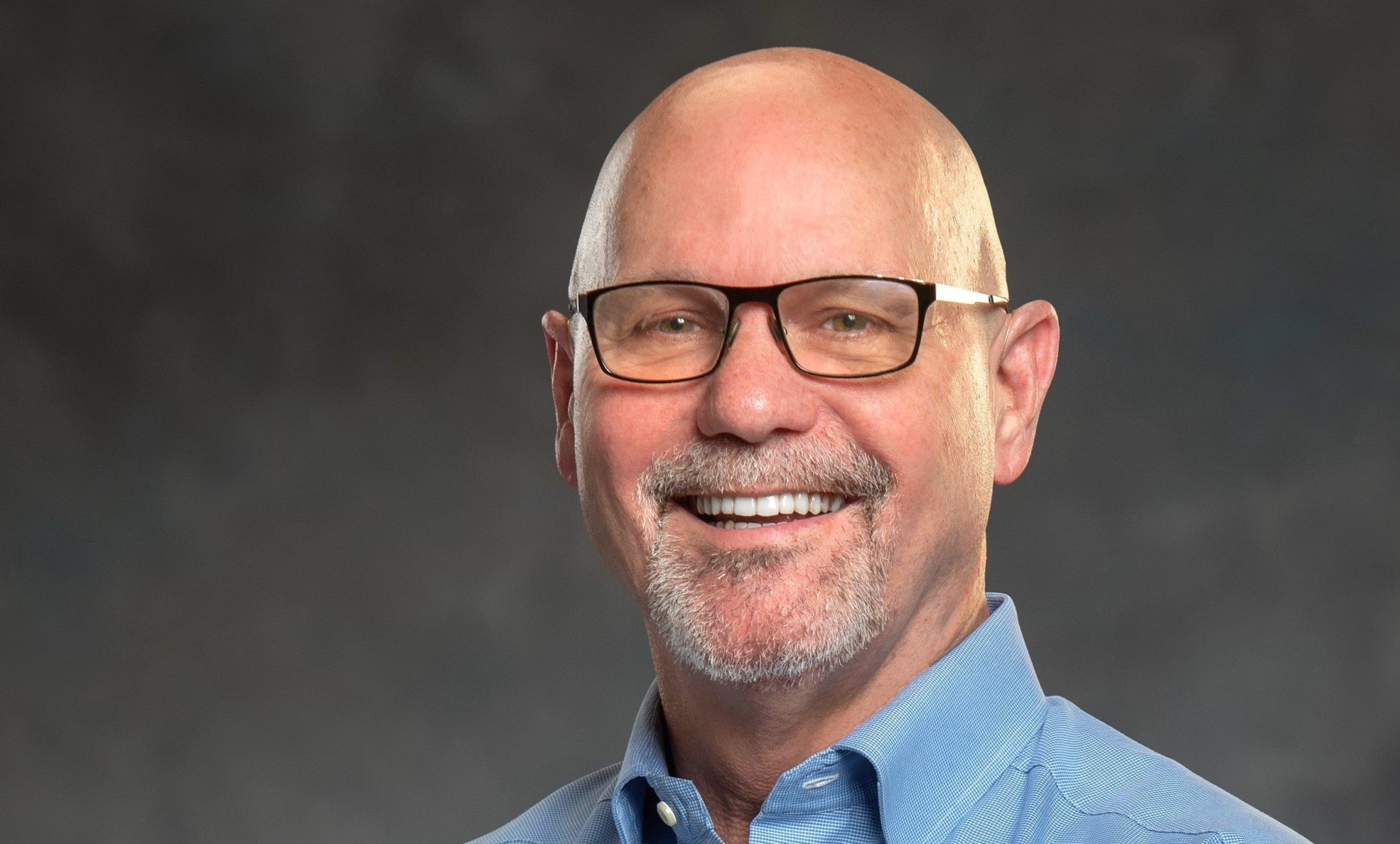
As a part of our Provider Spotlight series, MusiCares highlights Steve Lee, Cumberland Heights' Senior Director of Strategic Relationships, with an interview that dives deeper into how they've supported the music community through sober living and his own experience with recovery.
How did you first become interested in the field of addiction treatment and recovery?
Like many in the field, my interest grew out of my own personal experience. I sought — or, more accurately, was compelled — to treatment in June of 1989 as the result of legal entanglements associated with my drug and alcohol use. Even though I was there under duress, my time in treatment, and then by extension, my introduction to 12-Step recovery was a life-changing experience. I have had continuous sobriety since that time. It would be 20 years before I would make a career shift and begin working in the behavioral health field.
Why is recovery important to you, and how do you encourage others to prioritize it?
As I previously stated, I am in recovery and continuously clean and sober for over 35 years. My physical sobriety, however, was the tip of the iceberg regarding what the 12-Step design for living has afforded me. There is a saying about 12-Step recovery fellowships that they rely on "attraction rather than promotion." I was attracted!
I hope the way I live might be an attraction to some. I am always ready to share what my life looks like and how I spend my time. I believe both of those will serve as an example of my personal priority of sobriety and recovery. I simply share what works for me and never what won't work for others.
Cumberland Heights is a treatment center that transforms lives, giving hope and healing to those dealing with addiction. Can you tell us more about your approach and what inspires you?
Cumberland Heights is a nonprofit established in 1966. We provide multiple levels of care including detox, residential, partial hospitalization, intensive outpatient, outpatient, and 12-Step immersion and adolescent treatment.
In broad strokes, that's what we do — but the more important component of your question is about approach and inspiration. We have sophisticated clinical modalities, but everything we do is through the lens of the Twelve Steps with a belief that awakening and nourishing the spirit is a critical part of recovery. Our inspiration comes from regularly seeing this spiritual transformation flourish not just in our patient population but within our staff, me included. Spirit feeds spirit.
For many people, getting help can at first feel intimidating. How have you been able to create an environment that helps your clients feel both comfortable and safe?
That begins with the staff at Cumberland Heights. From the first contact, whether with me or our admissions department, we know the courage it takes for an individual or family member to make that call for help. We want to match their courage with compassion and understanding. We realize how daunting the idea of going to treatment can be. My goal is always to try and provide a calming and reassuring presence.
How did you first hear about MusiCares?
Even before working in the behavioral health field, I had friendships and relationships with many through my personal recovery. Over 10 years ago, I was asked to facilitate a panel hosted by MusiCares and Cumberland Heights. This event was targeted to the music industry. It included artists, management, therapists, and treatment providers addressing both the importance and the challenges associated in assisting those in the music industry.
What similarities do you see between your mission and MusiCares' mission?
First and foremost, we both view the mission as heart-driven. All of the MusiCares staff that I have worked with over the years have unfailingly been driven by a genuine desire to help people. Cumberland Heights, our staff — and hopefully I — exhibit those same qualities. We are dedicated to helping individuals and families "recover life." We aren't just focused on cessation of alcohol and drugs, but rather opening the door to a life that has deep meaning and ultimately usefulness.
Can you share any memorable moments from your experience benefitting the MusiCares community?
There have honestly been many that have warmed my heart. A few years back, there was an artist who, after years of working clubs and small venues, was breaking through in a big way. There was a GRAMMY nomination and ultimately an invitation to perform at a major industry event. This was something the artist said was a lifelong dream. He had sought help with Cumberland Heights previously, but was starting to struggle with pain killers (opiates) again. He started the ball rolling by calling MusiCares… he wanted to get out ahead of this before he blew up the life he had dreamed of and worked so hard for.
MusiCares and Cumberland Heights worked together to provide the help he needed and wanted. A few months later, I received a text from the artist from backstage at the awards show where he was performing. He was expressing gratitude to Cumberland Heights and MusiCares. I was grateful that night to see recovery in action.
Is there anything else you'd like included in the piece?
Being located in Music City, Cumberland Heights has a long held commitment to supporting our neighbors in the music industry. This commitment extends to the GRAMMY-winning artist playing stadiums, the busker down on lower Broadway, or the crew member loading in and out for the shows. Everyone deserves the opportunity to recover life!