
Hip-hop is one of the largest music genres worldwide. Yet, the hip-hop community is widely underrepresented in access to financial, medical and mental health services. Women in hip-hop also face a unique set of challenges because of the male-dominated nature of the genre, as well as the music industry as a whole.
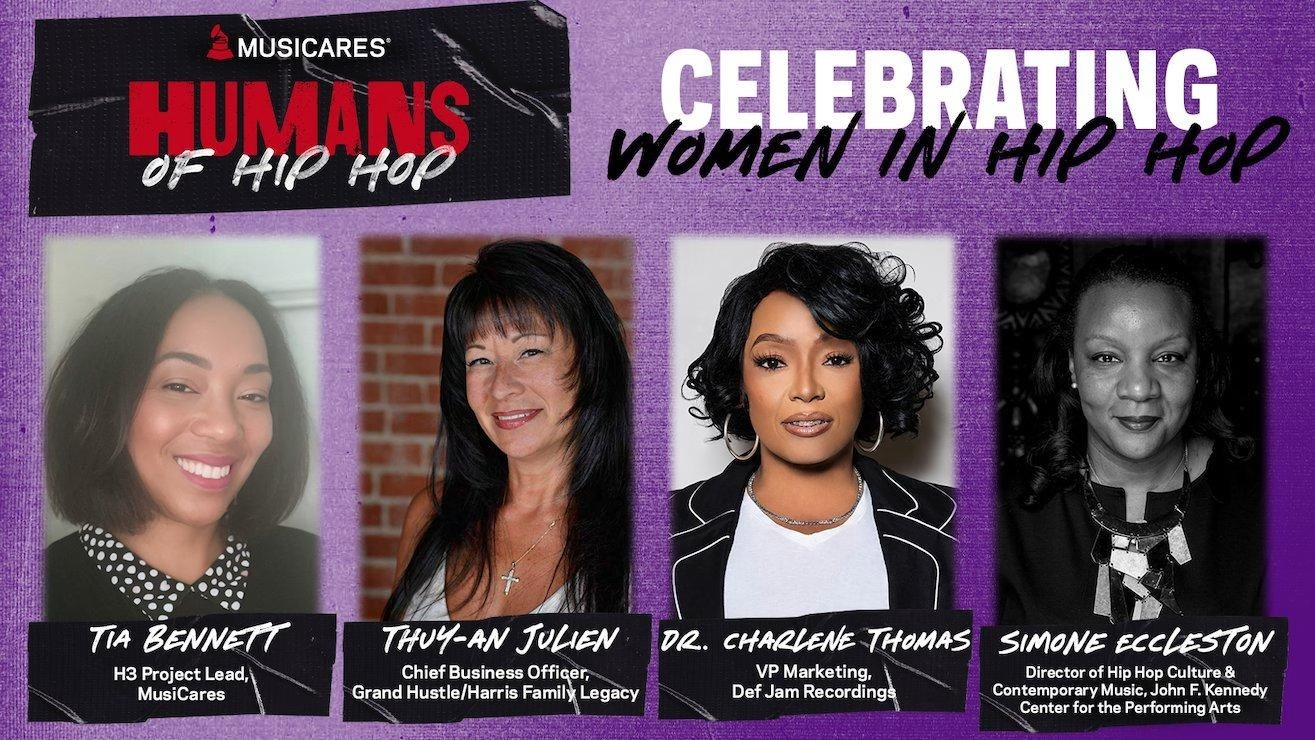
But since the genre's birth more than 50 years ago, countless artists and industry players have continued to break down the barriers women in hip-hop face. In celebration of Women's History Month and MusiCares' Humans of Hip Hop (H3) campaign, we wanted to shed a light on female executives who are trailblazers in the hip-hop music industry, both behind the scenes and friends of MusiCares: Dr. Charlene Thomas, Vice President of Marketing at Def Jam Recordings; Simone Eccleston, Director of Hip Hop Culture and Contemporary Music at John F. Kennedy Center for the Performing Arts; and Thuy-An Julien, Chief Business Officer of Grand Hustle/Harris Family Legacy.
This marks the start of our H3 Spotlight series, which aims to raise awareness on the needs of the hip-hop community, as well as amplify the voices of the humans behind the hip-hop industry and their experiences. Below, Thomas, Eccleston and Julien — as well as H3 Project Lead Tia Bennett — discussed their impactful work in the music industry and how they've overcome adversity.
The H3 campaign aims to provide resources tailored to the community's needs, all while raising awareness. Click here to learn more about the initiative.
How did you first get started in hip-hop, and what are some of the obstacles you've faced being a woman in a male-dominated industry?
Dr. Charlene Thomas: I started as an intern at Firehouse Recording Studio purposely learning engineering, because women were not known to be engineers. From there, I excelled at working at record labels.
Being a woman at that time in the music industry, no one took you seriously or recognized you as an integral part of the business. They thought you were a girlfriend or a groupie. Proving that I was serious about my job and role was a constant battle.
Simone Eccleston: I got started in hip-hop by producing cross-genre and cross-discipline collaborations as a performing arts presenter. This started through my work at Harlem Stage and blossomed in the years that followed through concurrent tenures at Harlem Stage and Revive Music Group, a boutique agency that produced genre-bending, creative-concept live shows, founded by Meghan Stabile. While there may be moments when someone tries to second guess you, you have to trust yourself and your expertise.
Thuy-An Julien: I was always a fan, but when I worked in a previous role at iTunes, I found that the hip-hop genre was being underserved. I felt that they needed a voice in the building. At that time, alt-rock was the number one genre and that was the focus. It took some convincing to show them how much money they were losing by not focusing on this consumer.
The most infuriating obstacle was my ideas being taken seriously when men brought them up and not when I did. People thought I was a stylist, assistant — you name it — and not an executive.
What is an accomplishment in your role that you are most proud of?
Julien: I am most proud of the fact that I was able to get a big company to see why hip-hop and the culture are so important. I am proud to see how hip-hop has become so important in the overall culture in America and knowing that I played a part in getting it there.
Thomas: I'm still here! I am still surviving! Being recognized and respected for my expertise is my biggest accomplishment. All of the artists that I have worked with and helped to realize their dreams — making a difference in their lives is my second biggest accomplishment.
My most recent biggest accomplishment would be having a NYC Resolution passed honoring Def Jam for the month of January 2024, alongside Queens CM [Nantasha] Williams. Achieving this Resolution was my contribution to the founders, artists, and executives/staff that have contributed to the essence of NYC through the music and created the undeniable legacy of Def Jam.
Eccleston: I am most proud of being able to build the hip-hop Culture Program at the Kennedy Center in partnership with our Artistic Director and hip-hop Culture Council. For hip-hop to have a home at the Nation's Cultural Center and for communities on a local, national and global level to be able to see themselves and their genius reflected here has been historic and transformative.
Tia Bennett: I am so proud to be leading the Humans of Hip Hop initiative. As the spearhead of this project, I've been able to implement programming and bring awareness to help music professionals within the hip-hop community.
So many hip-hop artists and people behind the scenes are unaware of MusiCares resources. It's my aspiration to aid and celebrate the culture by giving our hip hop pioneers and music professionals their flowers. I want to let them know we see and appreciate them for their efforts and the impact they've made on the world through hip hop music.
What is your most memorable hip-hop moment?
Thomas: My most memorable moment in hip-hop was when I started experiencing hip-hop being played on mainstream radio. I got to witness its global recognition. I partook in the lighting of ESB last year on the birthdate of hip-hop which symbolized the barriers this genre of music has overcome.
Eccleston: There are too many moments to count, many of which happened at the [Kennedy] Center — like D-Nice's Club Quarantine Live, MC Lyte's I Am Woman [annual celebration concert] and residencies with The Roots and Robert Glasper. However, being back home in the Bronx for the hip-hop 50 Celebration at Yankee Stadium was the ultimate homecoming.
Bennett: A memorable moment in hip-hop for me was the first time I saw Salt-n-Pepa's "Push It" video. I remember being in awe of seeing dope female emcees holding their own in a majority male dominated industry back then. Their style molded how I saw myself as a young girl.
Through your experience in the hip-hop industry, in what ways have you been able to navigate your own mental health?
Thomas: Honestly, I just started navigating my mental health during the pandemic. Constantly having to prove myself in this male-dominated industry, I neglected a balanced life and my mental health. I am grateful that I finally decided to make my health a priority.
Julien: Mental health is a hard issue. The work is 24/7. Someone is always looking to take your job or undermine you for their own agenda. I honestly was very bad at self-care for a long time, but then I started talking to a life coach and allowing myself more grace. I have a little dog who keeps me sane.
Eccleston: I always remind myself to never lose sight of my mission, goals and the communities that I serve. That is what grounds me, and also what I reflect on when faced with an obstacle or challenge. I also maintain a self-care practice of meditation, journaling, prayer, and scheduled breaks.
Bennett: I've experienced a lot of grief in the past few years with the passing of my mother, two brothers, as well as other close family members and friends. I had to realize with work and in my personal life, it's okay not to be okay — sometimes you need to just pause, and not be ashamed to seek help.
As someone who is passionate and dedicated to my work, my grief has forced me to realize how essential work-life balance is to my own mental health. In my current role, I often think of my late brother Lawrence, aka DJ Pusha, and my late close friend Brian, aka Bestruck, because they were hip-hop, and both could have benefited from MusiCares if they had known of the resources we provide. So, I stay motivated to do the work because of people like them.
What can MusiCares do to assist with and increase mental health awareness to women in the hip-hop community?
Thomas: As the importance of mental health rises, we need more information on mental health and its importance advertised across all platforms. We need relatable messaging that breaks stigmas and emphasizes the importance of women investing in their wellness without feeling guilty. We as women should not feel guilty to take a day off when we need a mental break.
Eccleston: MusiCares can continue to create spaces and platforms for women in hip-hop to share their journeys and be in community with one another. It is important to know that we are supported and have a village that we can turn to.
Julien: Women tend to be the caregivers on a team. We are the empathetic ones. MusiCares can help those who help others with more tools for us to refer our teams to for support.
Bennett: As a representative of MusiCares, it's important that we continue to build trust, support and awareness of the mental health and wellness services we provide to help women in the hip-hop community.
What advice can you offer to the new generation of women interested in having a career in hip-hop as an executive?
Thomas: My advice to the next generation would be to own your creativity. We are the music business! We are entertainment! Think outside the box, be innovative, be a game changer! While you are young, try different things, different departments, and learn different skill sets so you can determine your path.
Julien: Know what you are signing up for. It's still 24/7, and you will need to be strong. Don't lead with your looks, lead with your smarts. Be professional and build a solid reputation of excellent work. Always keep your promises, and don't be afraid to say no. Move honorably.
Bennett: Find a mentor, intern to gain experience, learn all aspects of the business, and be your authentic self when seeking opportunities.
Eccleston: There are so many pathways to create and sustain a successful career in hip-hop. The most important thing is to stay true to your mission, values and vision for the work. The right opportunities will always find you — and if they don't exist, create them.